Par-baked, frozen, ultra-fresh: what are we really talking about?
Three models coexist in foodservice, and confusing them skews the decision. Par-baked bread is partially baked (baking interrupted), then cooled or frozen; it requires a finishing bake in the kitchen. Frozen bread can be raw, par-baked or fully baked, then deep-frozen to the core (-18°C) for several months of storage.
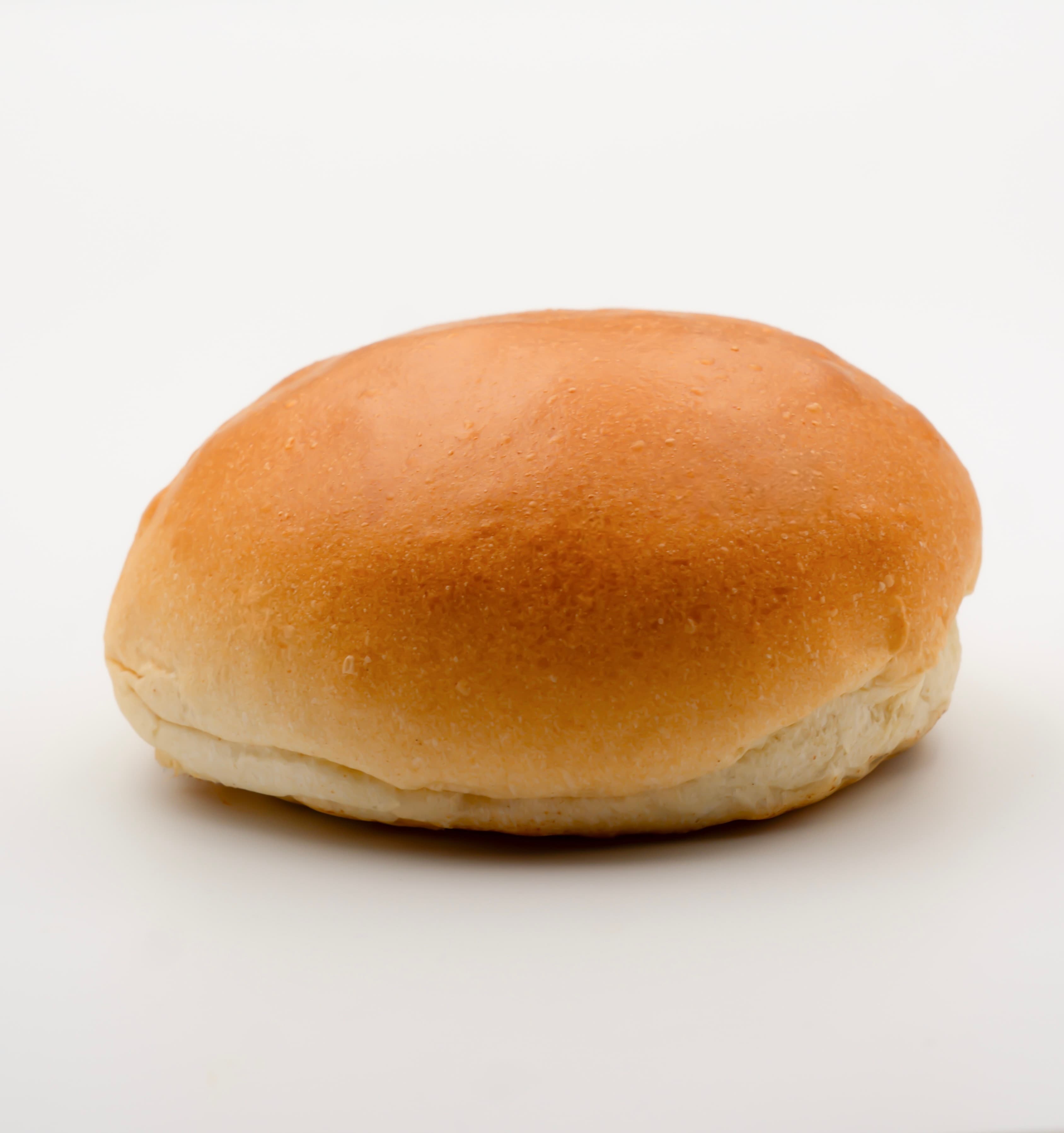
Ultra-fresh bread, by contrast, is fully baked, cooled and delivered as is, without any deep-freeze step. This is the model of our Noblépis buns: produced and shipped quickly, with a 3-day shelf life. The fundamental difference is not just shelf life, but the state of the starch and moisture migration, which determine the final texture.
« The short 3-day shelf life is not a constraint we endure; it is the signature of a model. We refuse the deep-freeze in order to deliver a crumb that thawing simply cannot reproduce, and our entire dawn logistics exists to make that freshness viable every single day. »
Which model offers the best eating quality?
Eating quality leans toward ultra-fresh, for a simple physico-chemical reason: freezing and thawing accelerate staling (starch retrogradation) and cause water migration that dries out the crumb or softens the crust. Bread that is baked, cooled and eaten within a few days keeps a more even chew and a cleaner softness.
A well-managed par-baked/frozen product remains perfectly acceptable, especially after careful regeneration. But it demands a rigorous finishing bake: under-bake and the crust stays pale, over-bake and it dries out. Ultra-fresh removes this operator variable. For a premium burger or a signature sandwich, the texture consistency of a fresh bun is a concrete point of difference on the plate.
Shelf life and storage: the real trade-off
This is where par-baked/frozen takes the lead. Frozen at -18°C, bread keeps for several months: ideal for absorbing peaks, smoothing out orders and securing irregular supply. In return, it ties up freezing capacity, a deep-freeze chain and strict thawing management.
Ultra-fresh accepts a short shelf life — 3 days for Noblépis buns — which demands precise quantity management. This is not a flaw, it is a model choice: you trade stock for freshness. The risk of waste exists if forecasting is poor, which is why a well-calibrated order and reliable delivery matter so much.
What each model costs you and gives you
- Frozen/par-baked: long shelf life, buffer stock, but deep-freeze required and a baking step in the kitchen.
- Ultra-fresh: crumb quality and zero regeneration, but short shelf life and rigorous forecasting.
- Frozen/par-baked: ideal for irregular demand and remote multi-site operations.
- Ultra-fresh: ideal for steady service, premium positioning and a clear product story.
Is just-in-time viable with a 3-day shelf life?
Yes, provided the logistics are dialed in. Just-in-time means receiving as close as possible to actual need, to minimize stock and maximize freshness. With a 3-day shelf life, the margin for error is small: everything rests on delivery regularity and order accuracy.
Our setup is built for this: order cut-off at 17:00, delivery from dawn the next day (J+1). In the Île-de-France region we run our own fleet of 5 refrigerated vehicles (under 3.5t); for nationwide delivery we use STEF. Products travel in positive cold at 0-4°C. In practice, a restaurateur can order the evening before and start service with buns made very recently, without tying up any stock.
The Noblépis know-how: what happens in the recipe
Beyond the storage model, quality lives in the formulation. Noblépis buns are 100% French origin, made with flour from Grands Moulins de Paris. We work with liquid eggs rather than shell eggs, a choice driven by food safety and dough consistency.
The range is broad and built for real uses: Provençal, Royal, Gourmet, Potatoes Buns, Mini Burger, Philly, Hot-Dog, Tregel, Black Burger, Lobster. Packaging in cartons of 30 pieces makes rotation easy, with a production capacity of 8,000 pieces per day. This diversity lets you match the bread to the concept — from smash burger to lobster roll — without sacrificing freshness.
How do you choose between the two models for your establishment?
The right call depends on your operational reality, not on a principle. Ask yourself three questions: what is my volume and how regular is it? What cold-storage capacity do I have? What level of eating quality does my positioning demand?
If your demand is irregular, if you are far from fresh-delivery routes, or if you want a safety stock, frozen/par-baked remains relevant. If you turn over regularly, aim for premium positioning and can rely on dependable dawn delivery, ultra-fresh Noblépis offers a clear taste advantage and a readable product story. Many establishments, in fact, combine both depending on the reference.