What is the cold chain in the food industry?
The cold chain is the continuous set of refrigeration operations that keep a product at controlled temperature, from manufacture to final use. In the food industry, we distinguish negative cold (freezing, around -18°C) from positive cold, which holds fresh goods between 0 and 4°C. It is this latter range that applies to fresh refrigerated products.
The goal is twofold: to slow the growth of the micro-organisms responsible for food poisoning, and to preserve the product's sensory qualities (texture, taste, appearance). Between 0 and 4°C, bacterial activity is strongly curbed without freezing the product, which would otherwise damage its structure. This is the ideal zone for fresh products with a short shelf life.
The rule is simple but demanding: continuity comes first. A cold chain is only effective if none of its links fails. The highest temperature the product reaches, even briefly, largely determines its real safety.
« The cold chain isn't a step, it's a discipline practised every single minute. Every minute saved on waiting times and every degree kept under control ends up on the restaurateur's plate. »
What are the links of the cold chain?
The cold chain is not a single event but a sequence of interdependent steps. Each link must guarantee the 0-4°C range, and the failure of just one weakens the whole. Understanding this architecture makes it possible to pinpoint exactly where risks lie and how to control them.
The essential links of the positive cold chain:
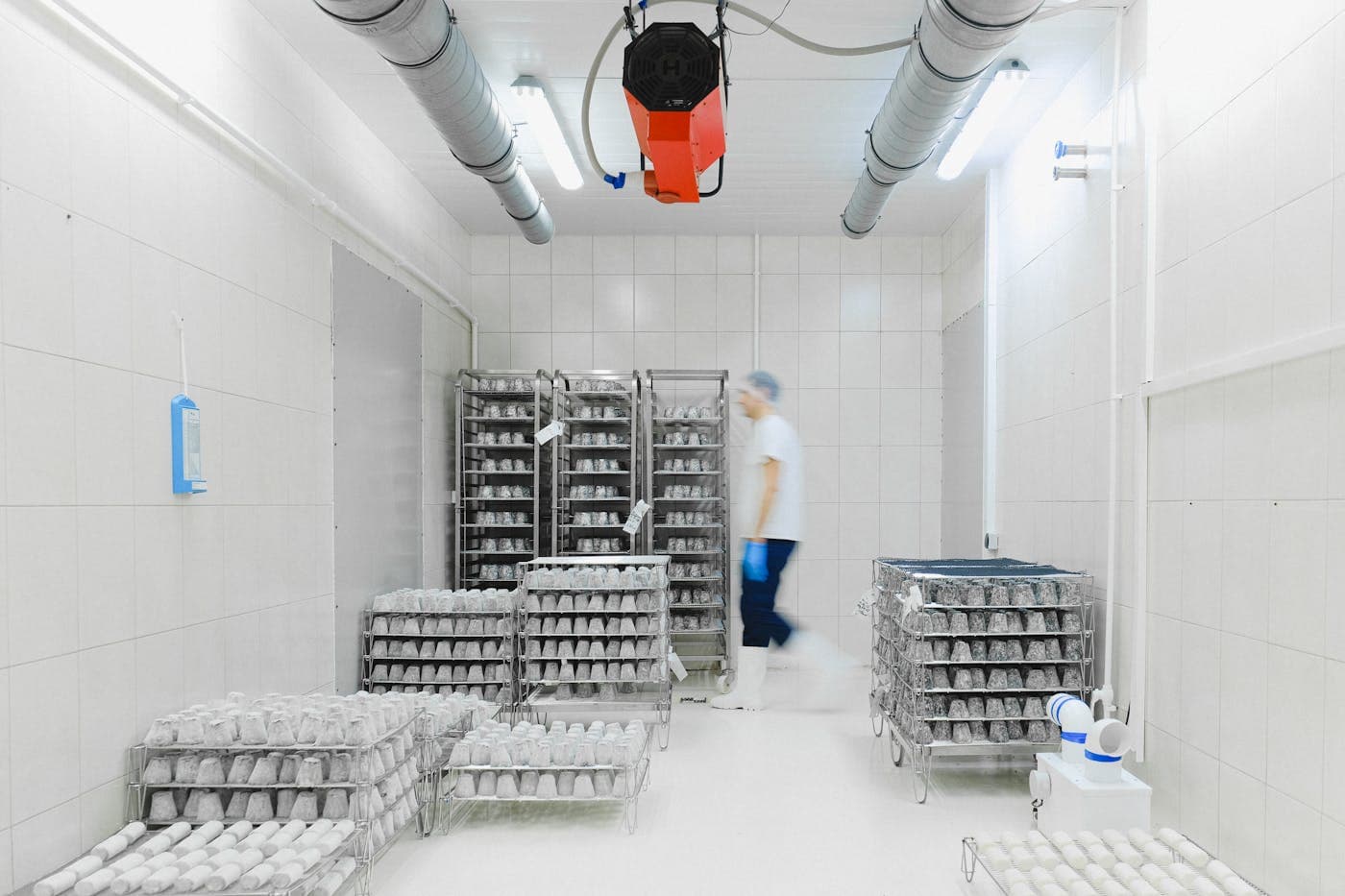
- Storage of raw materials and finished goods in cold rooms at 0-4°C.
- Preparation and packaging in temperature-controlled workshops.
- Holding and refrigerated dispatch zone before loading.
- Fast loading into pre-chilled refrigerated vehicles.
- Refrigerated transport with temperature monitoring and recording.
- Reception and immediate return to cold at the professional client's site.
Cold chain breaks: why are they so critical?
A break in the chain is any interruption of refrigeration: a cold room door left open, a long wait on a non-refrigerated dock, a vehicle that was not pre-chilled, or a late reception at the client. Even when short, it raises the temperature at the core of the product.
The danger lies in the so-called "danger zone" (roughly 5 to 63°C), where bacteria multiply fastest. A few minutes at ambient temperature on a fresh product can be enough to trigger microbial growth that will not be visible immediately, but which shortens the product's real shelf life and increases the health risk.
For a short-shelf-life product like a fresh sous-vide fry, the stakes are at their highest: the margin is thin and every degree counts. Controlling transfers, waiting times and transshipment points therefore becomes a quality factor as important as the recipe itself.
Refrigerated transport: how do you keep the cold in motion?
Transport is the most exposed link, because the product leaves the controlled environment of the plant. A refrigerated vehicle must be pre-chilled before loading, actively maintain temperature while driving, and limit door openings during multi-stop rounds. Temperature monitoring documents compliance with the chain throughout the journey.
Logistics organisation plays a decisive role. An optimised route reduces the number of openings and the exposure time of each delivery. At national scale, using a specialised cold network extends continuity beyond the local radius, without any temperature break.
The golden rule remains speed: the less time a product spends outside its target range, the better it is protected. Designing delivery windows, such as dawn drop-offs, is precisely aimed at minimising that exposure.
The Nouryla case: in-house fleet, STEF and a 17:00 cut-off
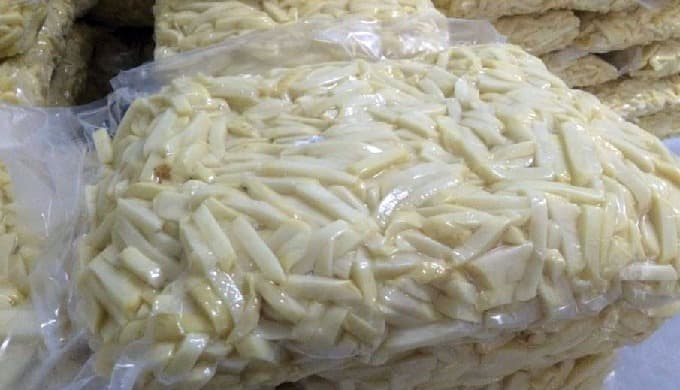
At Nouryla, a brand of Fresh Distrib based in Trappes (near Paris), cold control is structural because Kroustis fries are sold fresh, never frozen. Products are vacuum-sealed in 10 kg bags and stored between 0 and 4°C, with a 7-day shelf life that demands flawless logistics (a modified-atmosphere project aims to extend it to 12-15 days).
Distribution relies on two complementary levers. In the Paris region, an in-house fleet of 5 refrigerated vehicles under 3.5 tonnes provides direct control of the rounds. For national coverage, the STEF cold network takes over. The 17:00 order cut-off enables overnight preparation and a dawn delivery on D+1, minimising the exposure window as much as possible.
Traceability completes the setup: through the CorLink ERP, each fries delivery note carries the exact potato lot number, and each big bag has a unique identifier. This rigour secures every link and enables end-to-end tracking.
Freshness and safety: what's at stake for the restaurateur?
For the professional receiving the goods, the cold chain continues inside their own kitchen. Reception must be fast, with a temperature check on arrival and immediate return to the cold room. This is the final link, often overlooked, and it can undo the efforts made all along the upstream journey.
Freshness is also an economic issue. A product whose cold chain has been respected holds its shelf life, limits waste and delivers consistent yield in the kitchen. Conversely, an invisible break can translate into losses, degraded cooking quality and a risk for the end consumer.
Beyond regulatory compliance (HACCP applied), cold control is a concrete quality argument. It guarantees that the promise of a fresh product arrives intact, from the production site all the way to service in the dining room.