Why is double frying essential?
A great fry must combine two opposite textures: a soft, fluffy centre and a crisp shell. A single fry cannot achieve both. If the oil is too hot, the surface browns before the inside is cooked; too cool, and the fry soaks up oil without ever crisping.
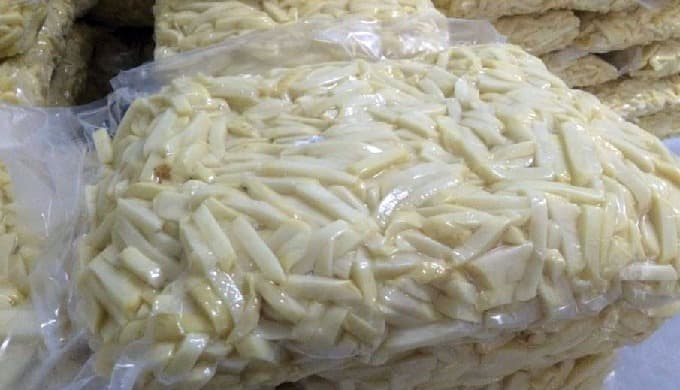
Double frying solves this dilemma. The first bath, called blanching, cooks the starch through at a moderate temperature. The second, hotter bath dehydrates the surface and triggers the Maillard reactions responsible for golden colour and crunch. It is the reference technique in professional kitchens, and it works perfectly with a fresh, vacuum-sealed fry that retains all the potato's natural moisture.
« A fresh fry is not a frozen product you reheat: it is a living ingredient that demands respect for temperatures. Double frying is not optional, it is the condition for crispness. »
The double-frying method, step by step
Here is the standard protocol for a fresh fry in an 11x11 cut. Respect the temperatures and times: they are what separate an ordinary fry from a memorable one.
6-step cooking protocol
- 1. Prep: remove the fries from their packaging, drain excess water and pat the surface dry to limit splattering.
- 2. First bath (blanching): fry at ~150 °C for 4 to 6 minutes. The fry should cook through without taking on colour; it stays pale and pliable.
- 3. Rest: drain and let cool for at least 5 to 10 minutes. This rest dries the surface and is crucial for final crispness.
- 4. Second bath (colouring): fry at 175-180 °C for 2 to 4 minutes, until evenly golden.
- 5. Drain: shake the basket, let the oil run off for a few seconds, then transfer to absorbent paper.
- 6. Season immediately: salt right away, while the fry is hot and lightly oily on the surface, for perfect adhesion.
How should you manage your frying oil?
Oil is not a passive consumable: it is a genuine ingredient that directly shapes taste, colour and food safety. Well-maintained oil produces clean, golden fries; tired oil yields dark, bitter, greasy ones.
Filter the oil at least once a day to remove burnt starch particles, a source of acrid flavour. Monitor total polar materials (TPM): French regulations set a maximum threshold of 25 %, beyond which the oil must be replaced. Keep a lower holding temperature between services to limit oxidation, and cover the tanks. Finally, never mix fresh oil with heavily used oil: doing so accelerates the degradation of the new batch.
Crispy or fluffy: how do you adjust the result?
The contrast you want depends on several levers you can fine-tune. For more crispness, slightly extend the rest between the two baths and lengthen the second bath without exceeding 180 °C. A skin-on fry, like a rustic reference, naturally brings more bite and character.
For a softer centre, play with the cut: a thicker fry retains more internal moisture. A longer blanch at a controlled temperature guarantees a tender inside. The ideal balance for foodservice remains a consistent 11x11 cut, which offers an excellent crust-to-centre ratio and a steady yield per portion, essential for keeping costs under control.
What are the most common cooking mistakes?
Most failed restaurant fries stem from a small number of recurring mistakes that are easy to fix once identified. Avoiding them is the fastest quality gain a kitchen can make.
Pitfalls to avoid
- Overloading the basket: the oil temperature drops sharply, cooking becomes uneven and the fry soaks up oil.
- Skipping the rest between baths: without surface drying, crispness never forms.
- Salting before frying: salt draws moisture out and weakens the crust; always salt on exit.
- Using oil that is too far gone: dark colour, bitter taste and greasy fries are guaranteed.
- Neglecting drainage: a poorly drained fry turns soft within minutes on the plate or in the takeaway box.
- Mixing cut sizes: uneven cooking, with some fries burnt and others raw.
How do you optimise yield and consistency in service?
In foodservice, consistency matters as much as occasional perfection. A fresh fry delivers excellent yield because the potato keeps its natural density, without the added water of industrial frozen products. A consistent cut makes portioning and per-plate weight forecasting straightforward.
To keep pace during the rush, blanch in batches during quiet periods, hold the blanched fries chilled, then run only the second bath to order. This pre-cooking approach preserves quality while cutting service time. At Nouryla, Kroustis fries are delivered fresh and vacuum-sealed, never frozen, with lot-level traceability: every delivery note carries the exact potato lot number, a real asset for your establishment's quality control.